
  1. Home
  2. Emerging Tech
  3. News

From moisture to electricity: Scientists show off how kitchen items can power wearables and smart home devices

Scientists built a biodegradable electricity generator from gelatin, salt, and charcoal.

Add as a preferred source on Google
moisture-electric-generator
Ketut Subiyanto / Pexels

What if the humidity in the air around you could charge your fitness tracker or power your smart home sensors? That is exactly what an international research team led by scientists at Queen Mary University of London has achieved.

Their new device, called a Moisture-Electric Generator or MEG, turns ambient moisture into usable electricity using just three ingredients you could find in any kitchen: gelatin, table salt, and activated charcoal.

How does it work?
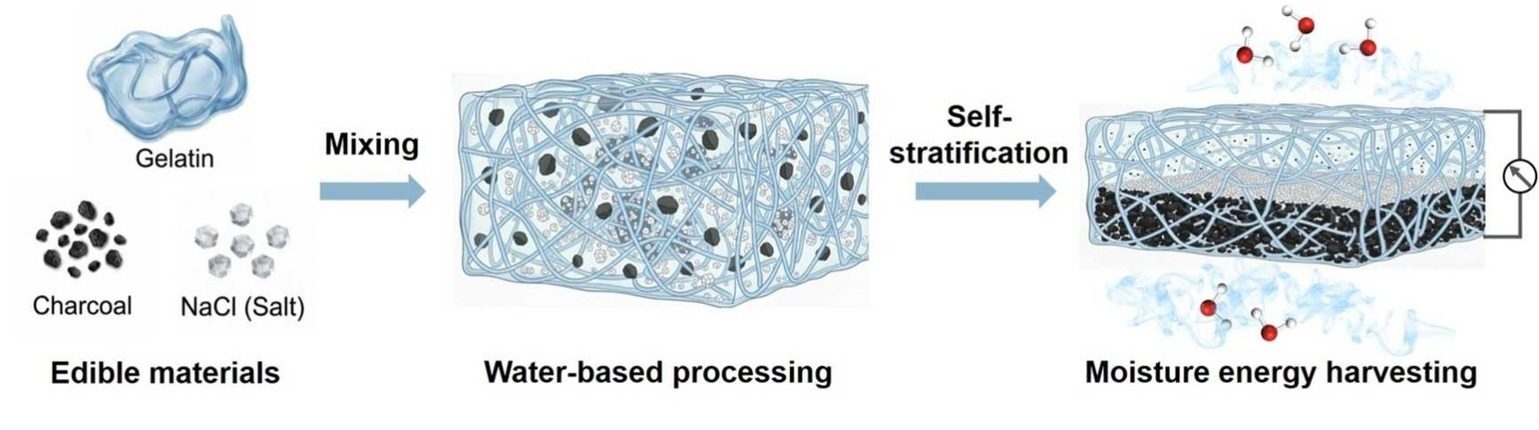
The MEG works by absorbing water molecules from the surrounding air or directly from human skin. When the gelatin and salt mixture dries, it naturally separates into three distinct layers without any complex manufacturing steps.

Recommended Videos

This structure creates a moisture gradient that drives ion movement through the material, generating a stable electrical output of around 1 volt per unit for over 30 days.
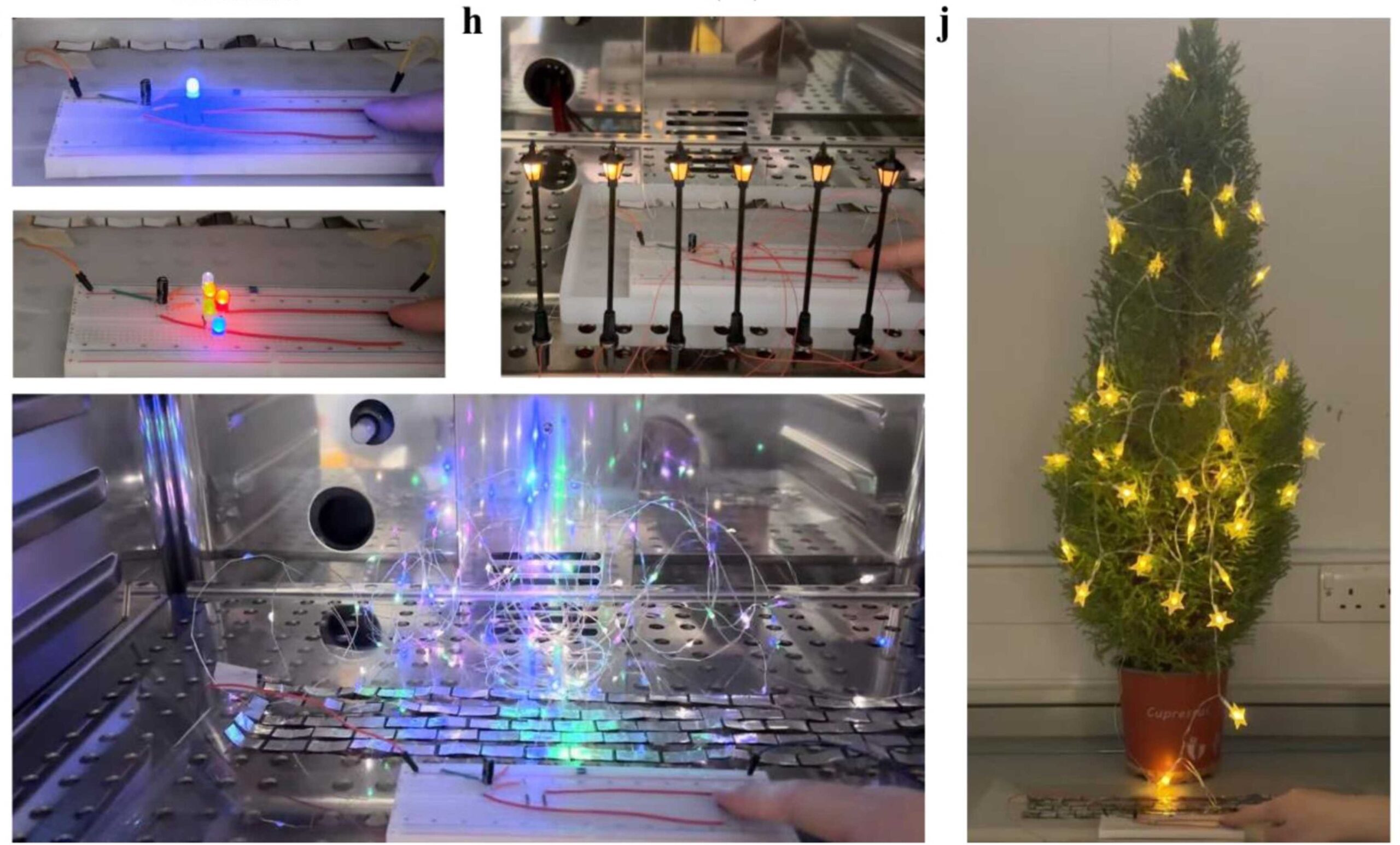
When you connect 100 units together in a series, the output scales up to 90 volts and 5.08 milliamps, enough to power a string of 40 decorative lights. That 100-unit stack also weighs just 6.7 grams and takes up less space than a standard AA battery, which only delivers 1.5 volts by comparison.

It can sense your breathing and dissolve in soil when you are done with it

Beyond generating power, the MEG doubles as a self-powered sensor. It can detect breathing patterns in real time by picking up changes in exhaled moisture. It can also read the number of syllables in spoken words and track skin hydration levels.
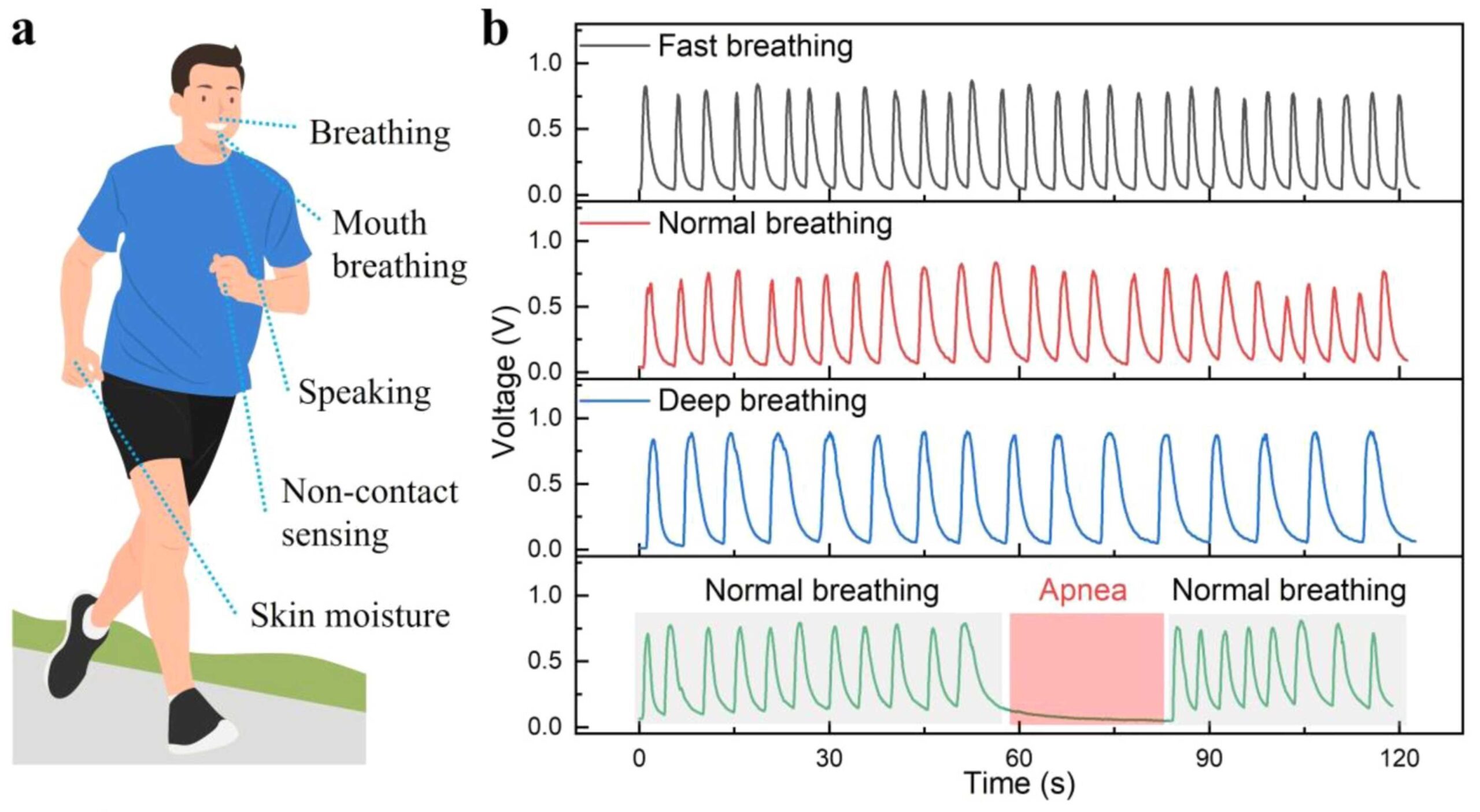
Even touchless proximity sensing is possible, since natural moisture from a hovering fingertip is enough to trigger a voltage response. The best part is that the device biodegrades in soil within three weeks and can be recycled by dissolving it in water and recasting it, with no loss in performance.

The MEG joins a growing list of battery-free energy ideas. Researchers have previously demonstrated a protein nanowire device that harvests electricity from air moisture, a bionic mushroom that generates power through bacteria, and near-invisible solar cells thin enough to coat a car window.


Manisha Priyadarshini
Manisha Priyadarshini is a tech and entertainment writer with over nine years of editorial experience.
Brazil’s secret World Cup weapon taught the team when to ignore it
The data said he wasn't running enough. The footage said he was always in the “perfect tactical position.”
Soccer ball in net

Brazil has more World Cup titles than anyone, five of them to be precise, but after going through five straight tournaments without adding to that count, the team is leaning hard on data this time. 

Every player wears a sensor-packed "smart vest" tracking field position (via GPS), heart rate, and a stat called "player load," the same kind of numbers that your Whoop band or Apple Watch brags about, but tuned specifically for the sport.

Read more
New OLED breakthrough could make the next see-through screen actually worth using
The electrode fix that could finally make see-through screens worth looking at.
Computer Hardware, Electronics, Hardware

Every transparent OLED demo I’ve seen so far looks amazing for about ten seconds, right before I notice how dim or smudgy it actually looks. A big part of the problem is the role that electrodes play in the design. 

A transparent display requires a see-through electrode that sits on top of incredibly delicate organic light-emitting layers. However, most of the usual options either conduct electricity poorly or risk damaging those layers during manufacturing. 

Read more
This jacket pulls drinking water straight from the air
Engineers at UT Austin have developed a wearable textile that harvests ambient moisture into drinkable water.
Image showing person wearing a jacket with special fiber that pulls water from air

Engineers at the University of Texas at Austin have built a jacket that pulls drinkable water directly from the air, offering a potential solution for hikers, soldiers, agricultural workers, and emergency responders who operate far from reliable water sources.

How the jacket collects water

Read more