  1. Home
  2. Emerging Tech
  3. Wearables
  4. News

This jacket pulls drinking water straight from the air

Engineers at UT Austin have developed a wearable textile that harvests ambient moisture into drinkable water.

Add as a preferred source on Google
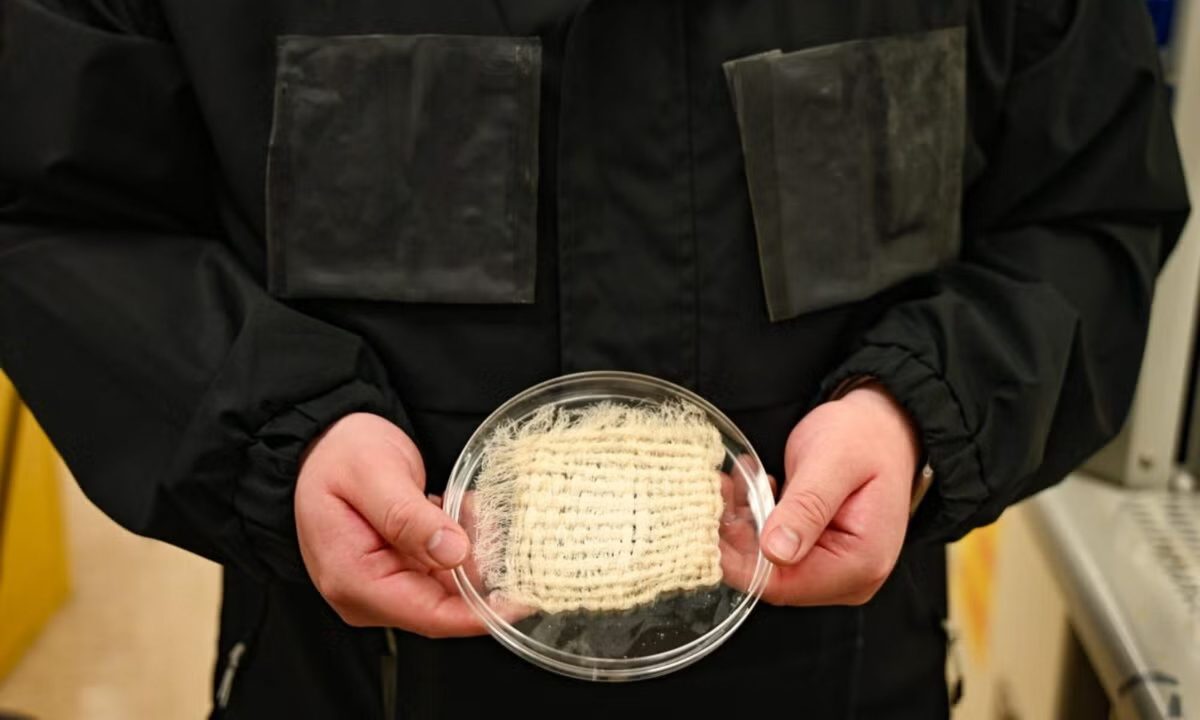
Image showing person wearing a jacket with special fiber that pulls water from air
UT News

Engineers at the University of Texas at Austin have built a jacket that pulls drinkable water directly from the air, offering a potential solution for hikers, soldiers, agricultural workers, and emergency responders who operate far from reliable water sources.

How the jacket collects water

The jacket’s fabric is made from a biomass-derived hydrogel that draws in ambient moisture and channels it to detachable harvesting units. Those units sit inside a foldable collector piece, where sunlight heats them to release the water for collection. In lab testing, the jacket yielded between 400 and 900 ml of water per day, roughly 14 to 30 ounces, depending on humidity. Compared with conventional water-harvesting materials, the textile performed three to ten times better at scale, according to the researchers.
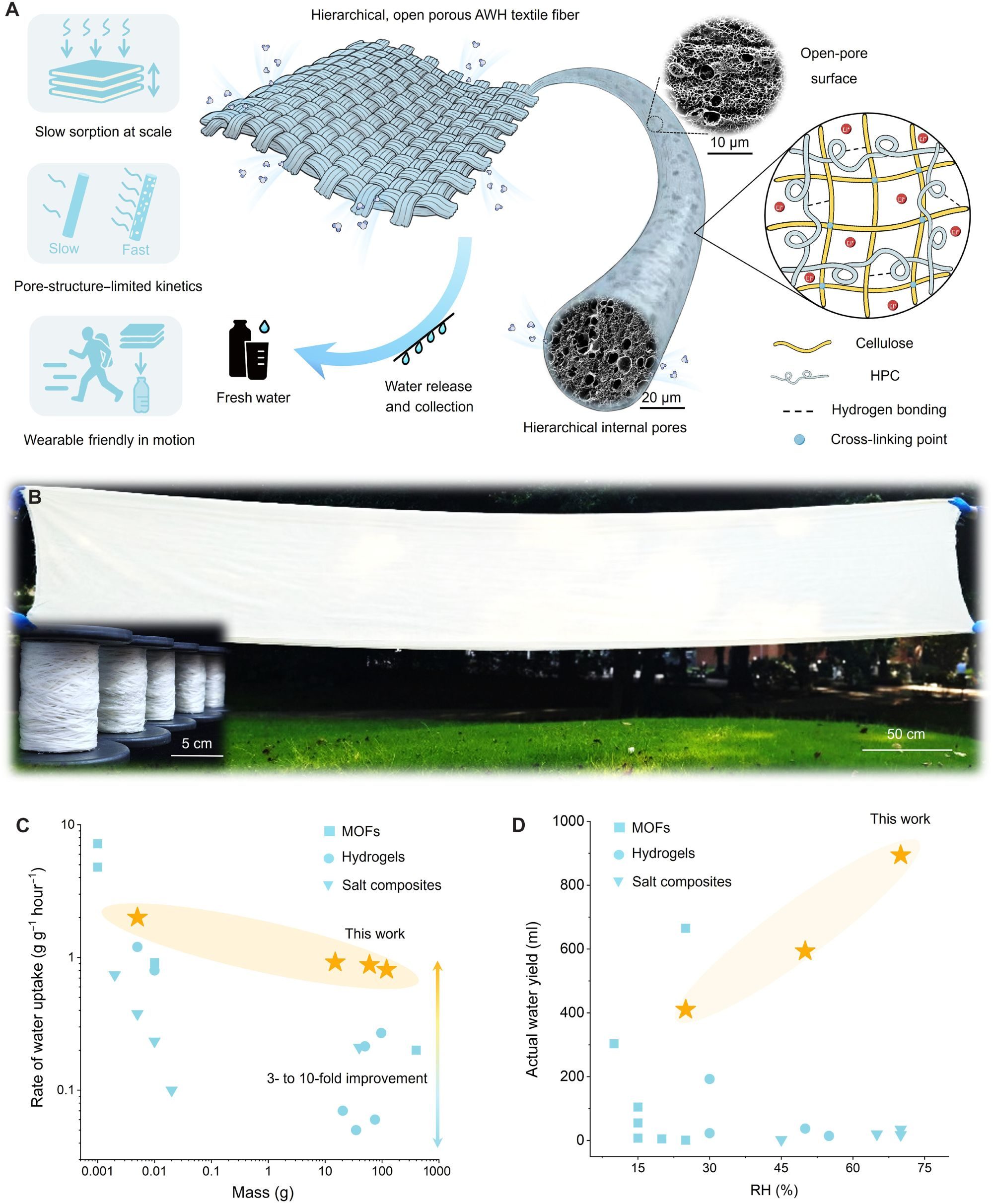
The team’s work, published in Science Advances, addresses a design gap that has limited atmospheric water harvesting to stationary devices like panels and sorbent beds. By engineering the transport pathway directly into the fiber, the fabric moves water from vapor in the air to liquid on the fiber surface and into the textile without the bulk of a standalone unit.

A separate record and a broader ambition

Alongside the jacket research, the same team published a second paper in Nature Water detailing a solar-powered harvesting device that set a new output record: 1.3 liters of clean water per day in both arid and semi-humid climates, equating to 4.3 liters per kilogram of moisture-capturing material per day. Field tests took place in the Chihuahuan Desert in New Mexico and in Austin, Texas.

Recommended Videos

The researchers see both the fabric and the device as part of a wider push to bring atmospheric water harvesting to the regions that need it the most, including parts of North Africa, the Middle East, South Asia, and sub-Saharan Africa. Future applications could extend to backpacks, tents, and emergency shelters.


Pranob Mehrotra
Pranob is a seasoned tech journalist with over eight years of experience covering consumer technology. His work has been…
Google built an AI that can see football plays before they happen
DeepMind’s latest research predicts player movement up to eight seconds into the future
Google Deepmind TacticAI Featured

Football managers spend countless hours analyzing corners, free kicks, and player positioning in search of tiny competitive advantages. Google DeepMind believes artificial intelligence can make that process significantly faster, and its latest project, TacticAI, is designed to do exactly that. TacticAI is a football-specific AI assistant capable of modeling player movement, forecasting future play dynamics, and even recommending tactical adjustments for corner kicks. One of its standout abilities is predicting player trajectories up to eight seconds into the future using only broadcast-style visual data.

TacticAI was built with Liverpool FC and validated by football experts

Read more
Radical new coffee-making method uses sound, skips hot water and reduces energy bills
UNSW reserachers brewed espresso with room-temperature water and ultrasonic sound waves, cutting energy use by 75% in blind tests that fooled 100 regular drinkers.
Person brewing espresso in a lab with a modified ultrasonic espresso machine

Researchers at UNSW Sydney have figured out how to brew espresso-strength coffee without heating any water. The method replaces hot water and high pressure with ultrasonic sound waves, and in blind taste tests involving 100 regular coffee drinkers, participants could not tell the two apart.

How it works

Read more
This tiny sensor could help self-driving cars and robots see better in the dark
Penn State researchers have developed a light-adaptive photomemristor modeled on the human eye that achieves over 95% visual accuracy in shifting light conditions.
Waymo Jaguar I-PACE sensors close up

Penn State researchers have developed a light-adaptive sensor component that could make autonomous vehicle cameras and robots far more reliable in shifting lighting conditions. The work, published Monday in Nature Communications, takes direct cues from how the human eye adjusts between bright and dark environments.

Biology as a blueprint

Read more