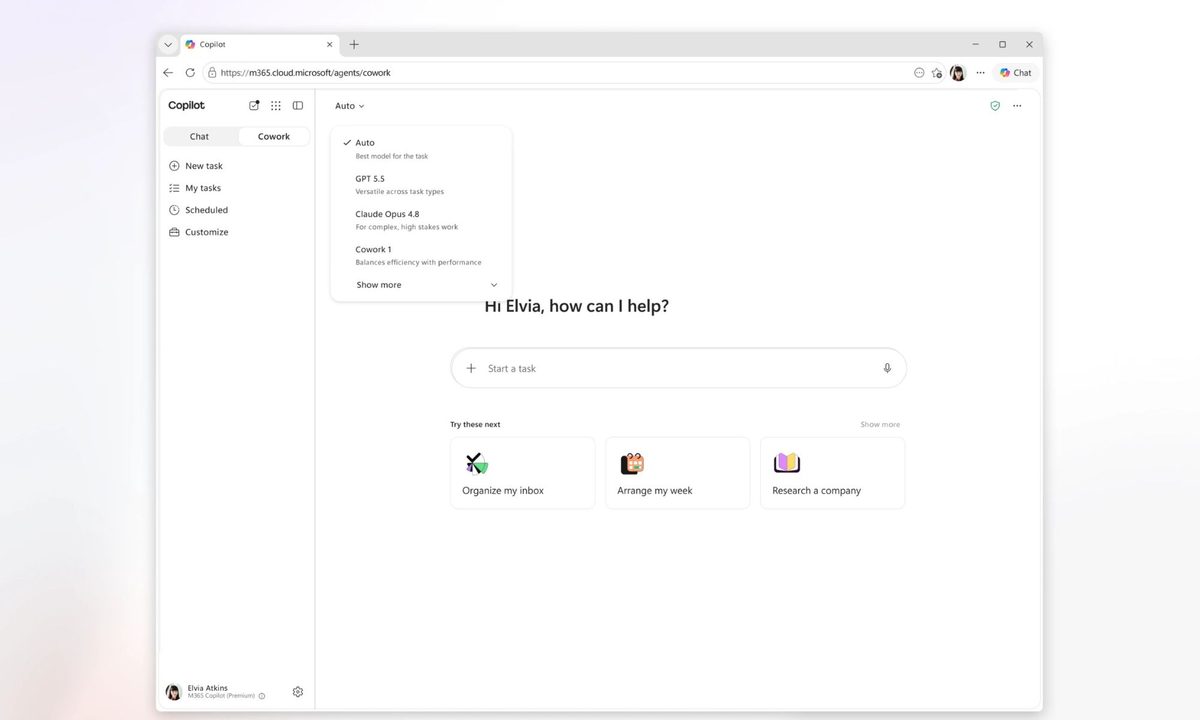
Microsoft is expanding its ambitions for workplace AI with the general availability of Copilot Cowork, an agentic system designed to handle complex tasks from start to finish rather than simply offering suggestions.
After spending three months in Microsoft’s Frontier preview program, the company says Copilot Cowork is already used by more than half of the Fortune 500, alongside organizations such as Accenture, Zurich Insurance, Capital Group, and others. The rollout marks one of the fastest-growing launches in the history of Microsoft’s Frontier program, according to the company.
Copilot Cowork wants to do the work, not just suggest it
Unlike traditional AI assistants that generate drafts or answer questions, Copilot Cowork is designed to execute long-running, multi-step workflows on a user’s behalf. Microsoft says customers have already used the system to compare thousands of files across product versions, automate spreadsheet-heavy workflows, generate dependency charts, and identify stalled sales opportunities. The company attributes that capability to a combination of cloud-based processing, enterprise security controls, and what it calls Work IQ — a context engine that allows the AI to pull information from the tools and systems businesses already use.
Microsoft is also emphasizing flexibility. Copilot Cowork can tap into different AI models depending on the task, rather than locking customers into a single model. At launch, the service runs on Anthropic’s Opus 4.8 and Sonnet 4.6 models, while Frontier customers can also access GPT-5.5. A new in-house model, Cowork 1, is expected to arrive in the coming weeks.
Microsoft’s latest AI agent comes with a different pricing strategy
Copilot Cowork requires a Microsoft 365 Copilot subscription, but its usage is billed separately through a consumption-based model. Instead of paying a flat fee, organizations are charged according to the resources required for each task, including model usage, context retrieval, tool calls, and runtime. To help businesses estimate costs, Microsoft says it has identified three common categories of work: light, medium, and heavy tasks. These range from simple requests involving limited reasoning to large-scale jobs that pull data from multiple sources and require deeper analysis.
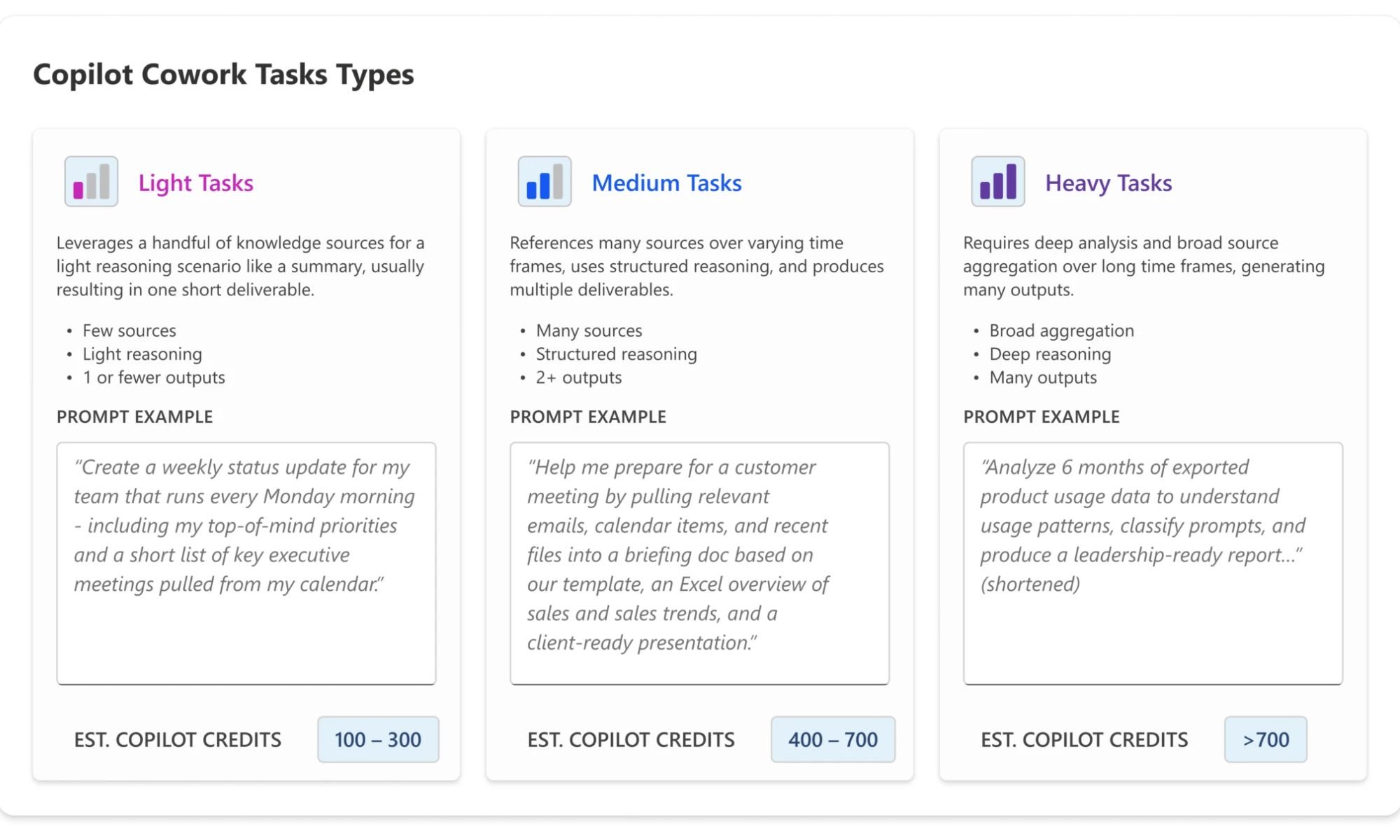
The company argues that this approach allows organizations to scale usage based on need rather than paying for unused capacity. Microsoft also claims internal testing showed Copilot Cowork to be roughly 30% to 40% cheaper per prompt than competing enterprise AI offerings using Microsoft 365 connectors. With Copilot Cowork now available worldwide, Microsoft is betting that the next phase of workplace AI isn’t about generating content faster — it’s about handing entire projects to an AI agent and letting it bring back the finished work.