
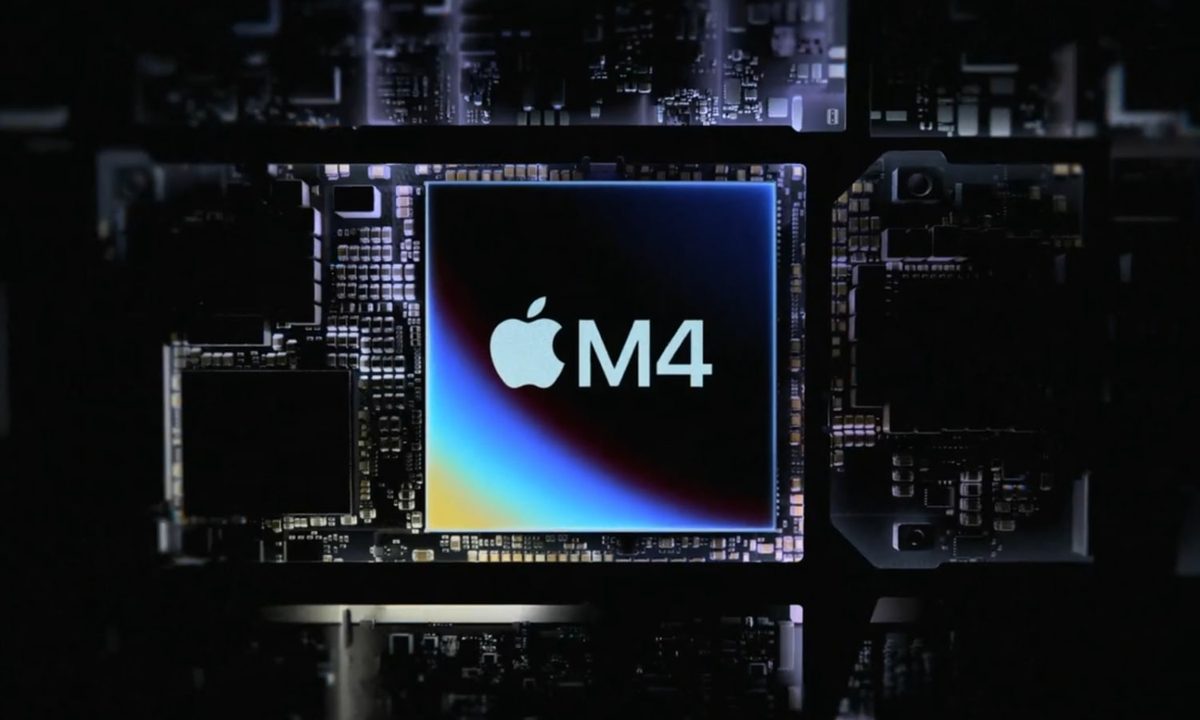
Apple has begun outfitting its Macs with the M4 chip, following the chip’s debut in the iPad Pro in spring 2024. But not every Mac comes with the M4 — several are still sporting the previous-generation M3, which offers impressive performance in its own right, and appears in the best MacBooks and Macs. These devices are expected to make the switch over the coming months.
That means there’s a split between M3 Macs and their M4 siblings, and the big question is whether you should upgrade. Is the M4 a large upgrade over the M3, or will you be fine sticking with the older chip? What sort of performance do the M3 and M4 offer, and how do they work under the hood? We’ve analyzed all the similarities and differences so that you know exactly what you should buy.
Where can you find these chips?

Right now, the M4 chip can be found in three Macs: the MacBook Pro, the iMac, and the Mac mini. It’s also in the iPad Pro. Besides the base M4 chip (which is found in all of these devices), the MacBook Pro and the Mac mini also offer the M4 Pro, while the MacBook Pro has a high-end M4 Max option as well.
Apple is apparently planning to bring the M4 to every single Mac. The MacBook Air is expected to step up in spring 2025, with the Mac Studio and Mac Pro following around the middle of the year. Once that’s done, every Mac will belong to the same chip family, which is something the company hasn’t done in years.
As we mentioned above, you can also find the M4 in the iPad Pro. Apple might well decide to add it to the iPad Air as well (the current model comes equipped with the M2, after all). The next iPad Air update is likely to arrive in early 2025, perhaps around the same time as the MacBook Air.
Speaking of the MacBook Air, that laptop is currently the only place where you can buy the M3 chip. While the Mac Studio and the Mac Pro haven’t received the M4 yet, they also skipped the M3 generation entirely. That means they come with either the M2 Max or M2 Ultra chip.
What’s different under the hood?

There are a few differences under the hood between the M3 and M4 chips, but those differences are subtle rather than monumental and are less significant than the changes experienced when Apple moved from the M2 to the M3 — at least on paper. We’ll get to the actual performance differences shortly.
Both the M3 and the M4 are made using a 3nm manufacturing process, which is one reason for the more minor changes (the M2 was a 5nm chip, and moving to 3nm enabled Apple to radically improve performance and efficiency). However, it’s worth noting that the M4 is a second-generation 3nm chip, which means there are some small improvements to its efficiency and output.
| M4 | M3 | |
| CPU cores | 10 (4 performance, 6 efficiency) | 8 (4 performance, 4 efficiency) |
| GPU cores | 10 | 8 or 10 |
| Neural Engine cores | 16 | 16 |
| Starting memory | 16GB | 16GB |
| Maximum memory | 32GB | 24GB |
| Memory bandwidth | 120GB/s | 100GB/s |
| Hardware-accelerated ray tracing? | Yes | Yes |
One area where we can see an immediate difference is the number of cores each chip comes with. The M3 has an 8-core CPU made up of four performance cores and four efficiency cores. This is supplemented by either an 8-core or a 10-core GPU (depending on the model) and a 16-core Neural Engine.
The M4, on the other hand, bumps those numbers up. The iPad Pro’s M4 has either a 9-core or 10-core CPU (with either three or four performance cores and six efficiency cores) depending on the configuration, while the M4 found in the Mac line has a 10-core CPU. In both cases, you also get a 10-core GPU and a 16-core Neural Engine. That means you get a few extra cores for your money, which helps to improve performance.
In terms of the Neural Engine, Apple says you’ll get 38 trillion operations per second (TOPS) in the M4, making it “more powerful than any neural processing unit in any AI PC today.” The M2, for comparison, could reach 15.8 TOPS, while the M3 reportedly hit 18 TOPS. Apple has also claimed it’s three times as fast as the Neural Engine found in the M1 Max chip.
That looks like a huge win for the M4, but it’s not quite the whole story, as per Tom’s Hardware. According to that outlet, the M4’s score is 38 TOPS with the INT8 data type. The M3, on the other hand, was 18 TOPS at FP16 precision. Once those two scores are equalized to INT8, the difference is about 5% in favor of the M4 — far less than the apparent doubling between the two chips.
There are a few other contrasts of note. The M4 is packed with 28 billion transistors compared to the M3’s 25 billion, and it has a memory bandwidth of 120Gbps compared to its predecessor’s 100Gbps. There’s also a dedicated display engine in the M4 that was absent in all of Apple chips before it, and this engine is used to handle the OLED display in the iPad Pro.
What’s more, the M4 doubles the starting memory from the M3’s 8GB up to 16GB, with larger RAM amounts as you move up in configurations. That will provide a big boost to productivity and multitasking and addresses a complaint Apple has faced for a few years now.
Performance

Now that we’ve been able to start reviewing Apple’s new M4 Macs, we know how well the chip performs compares to the M3. However, due to the chip configurations that Apple sent us for review, we haven’t been able to directly compare the M4 to the M3 in terms of benchmarks. In both the new MacBook Pro and the latest Mac mini, we received the M4 Pro model. When we reviewed the M3 series Macs, however, we got the M3 MacBook Air, the M3 iMac and the M3 Max MacBook Pro. So the following comparisons aren’t quite one to one.
Anyway, let’s look at the performance. In our testing, the M3 chip in the MacBook Air scored 141 and 601 in Cinebench R24 for single-core and multi-core performance, respectively, and took 109 seconds to render a video in HandBrake.
Now let’s compare that to the M4 Pro. In the MacBook Pro, the M4 Pro scored 179 and 1,752 in Cinebench R24 and took 49 seconds to render a video. That’s a significant increase in performance across the board.

OK, it’s also not particularly fair considering the M3 is an entry-level chip and the M4 Pro is much more powerful. But what happens when we put the M4 Pro up against the M3 Max in the MacBook Pro? After all, the M3 Max is one tier up from the M4 Pro.
In the 14-inch MacBook Pro, the M3 Max scored 139 and 1,522 in Cinebench R24 and took 53 seconds in HandBrake. That puts the M4 Pro firmly ahead in every scenario, despite being a lower tier of chip. That shows how much Apple has been able to push performance in its latest chips.
There’s another thing to consider: the M4’s inclusion of Dynamic Caching, mesh shading, and hardware-accelerated ray tracing. These are not new to Apple users — they’re already in the M3 series — but the iPad Pro didn’t have these features when it was outfitted with the M2. So, while that’s not an advantage the M4 has over the M3, it’s worth considering if you’re looking at getting an M4 iPad Pro.
It’s not easy choosing the right computer. Check our guide on b


