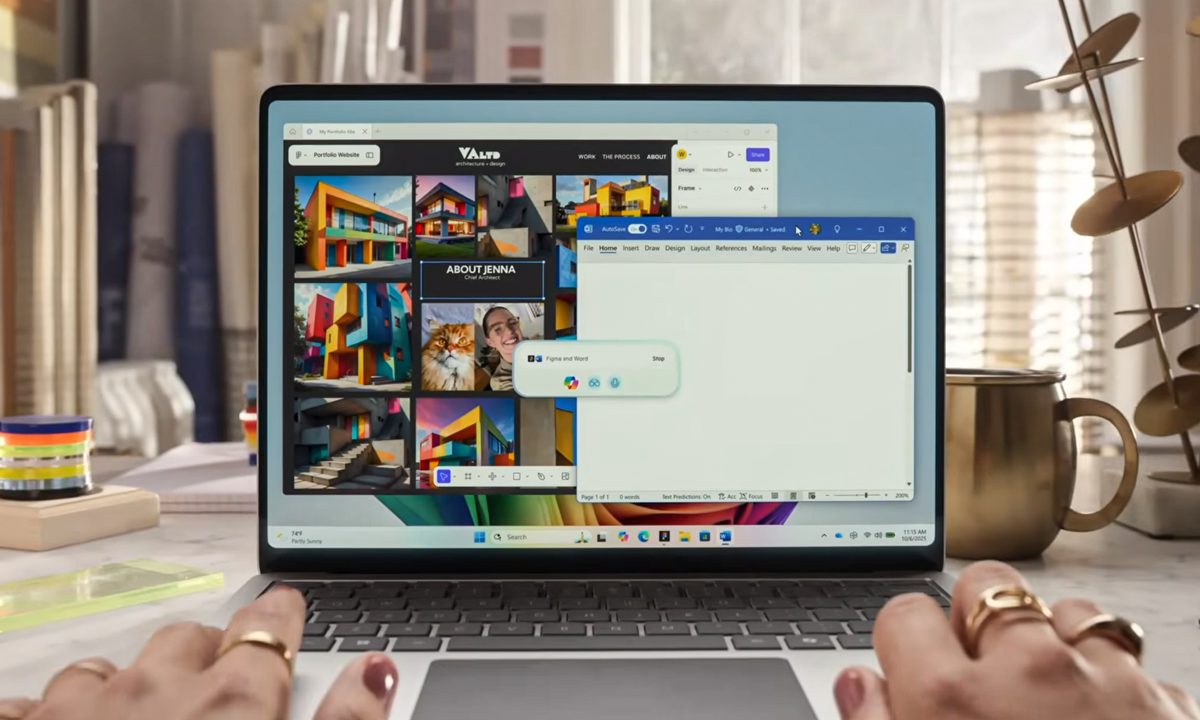
What’s happened? At the Microsoft Ignite 2025 event, the company revealed that AI agents will be deeply integrated into the taskbar, turning it from a simple app launcher into an AI command zone. These agents, including Microsoft 365 Copilot and third-party ones, will appear like normal icons, but carry out tasks in the background and let you monitor them from the taskbar. The “Ask Copilot” search box is also being upgraded, and agents will run in a special “agentic workspace” to protect stability and privacy.
- Agents will show an icon on the taskbar when active, with hover-over info on status and progress.
- The “Ask Copilot” search box is also being upgraded, allowing users to invoke agents directly using the buttons or by typing “@”.
- Windows is introducing a standardized “Model Context Protocol” for these agents to discover tools and other agents.
- The agentic workspace isolates tasks in a sandboxed environment so agents can access files/apps without full system risk.
Here’s how the new taskbar is supposed to work:
Why this is important: This update signals a shift in how we’ll use our PCs. No longer will real-time AI be tucked behind apps. Instead, it’s becoming part of the core UI, allowing smarter interactions and background automation without opening separate tools. As the taskbar gets smarter, Windows becomes more of an assistant platform than just an operating system.
- It could redefine how we engage with our PCs: less launching apps, more asking agents
- Background tasks (file processing, data summarisation, automation) become more visible and manageable.
- For productivity and creative users, the integration means fewer context switches and more seamless assistive workflows.
- It raises questions about privacy, security, and how much control users retain when agents act on their behalf.

Why should I care? If you use Windows 11, whether for work, gaming, or everyday tasks, this change could directly affect your experience. The agents will offer smarter, faster ways to get things done, but you’ll want to understand how they’re used, how much control you have, and whether you want them at all.
- You may be able to delegate routine or complex tasks (e.g., summarising files, launching multistep workflows) from the taskbar.
- If you worry about privacy or performance, you’ll want to check how the agentic workspace works and whether these features are opt-in.
- Early-adopter perks: users who adopt the preview could benefit from productivity boosts ahead of others.
- On the flip side, if you prefer minimal UI or maximal control, you’ll want to know how to disable or manage these features so your PC stays the way you like.
Okay, so what’s next? Microsoft will likely roll out more detailed documentation, controls, and possibly enterprise-level settings to manage agent behaviour, permissions, and monitoring. Developers and third-party agent creators are likely to jump in too, so you’ll start seeing new agent types, custom workflows, and integrations that tie into your favourite apps. If you lean into this early, you could reshape how you work and interact with your PC. On the flip side, if you hold back, you’ll still have the traditional taskbar experience, but you may miss out on the transformation. The bottom line: the taskbar is no longer just where your apps live — it’s becoming where your assistants hang out.