1. Home
  2. Emerging Tech
  3. News

Amazon is building a fleet of autonomous robots to deliver packages to your door

Add as a preferred source on Google
Amazon Scout

Having explored every time-saving delivery option from flying warehouses and package-carrying drones to checkout-free retail stores and even the controversial Amazon Key, it was only going to be so long until Amazon hopped aboard the delivery robot bandwagon. That’s what it has announced today with the launch of a brand-new service it’s referring to as Amazon Scout.

Recommended Videos

These last-mile delivery robots, which are essentially hampers on wheels, can navigate autonomously to their destination to drop off packages which are stowed securely inside. Amazon has begun a trial featuring six of these robots in one neighborhood in Snohomish County, Washington, where they’ll be delivering packages during daylight hours on weekdays. They will be accompanied by a human chaperone at first, although the long-term plan is likely for them to operate without the need for such supervision. The ordering experience on the part of the customer does not change.

“At Amazon, we continually invest in new technologies to benefit customers,” an Amazon blog post states. “We’ve been hard at work developing a new, fully electric delivery system — Amazon Scout –[ designed to safely get packages to customers using autonomous delivery devices.” Later on, it helpfully notes that, “we developed Amazon Scout at our research and development lab in Seattle, ensuring the devices can safely and efficiently navigate around pets, pedestrians, and anything else in their path.” (These pet-friendly conclusions have been borne out by other studies.)
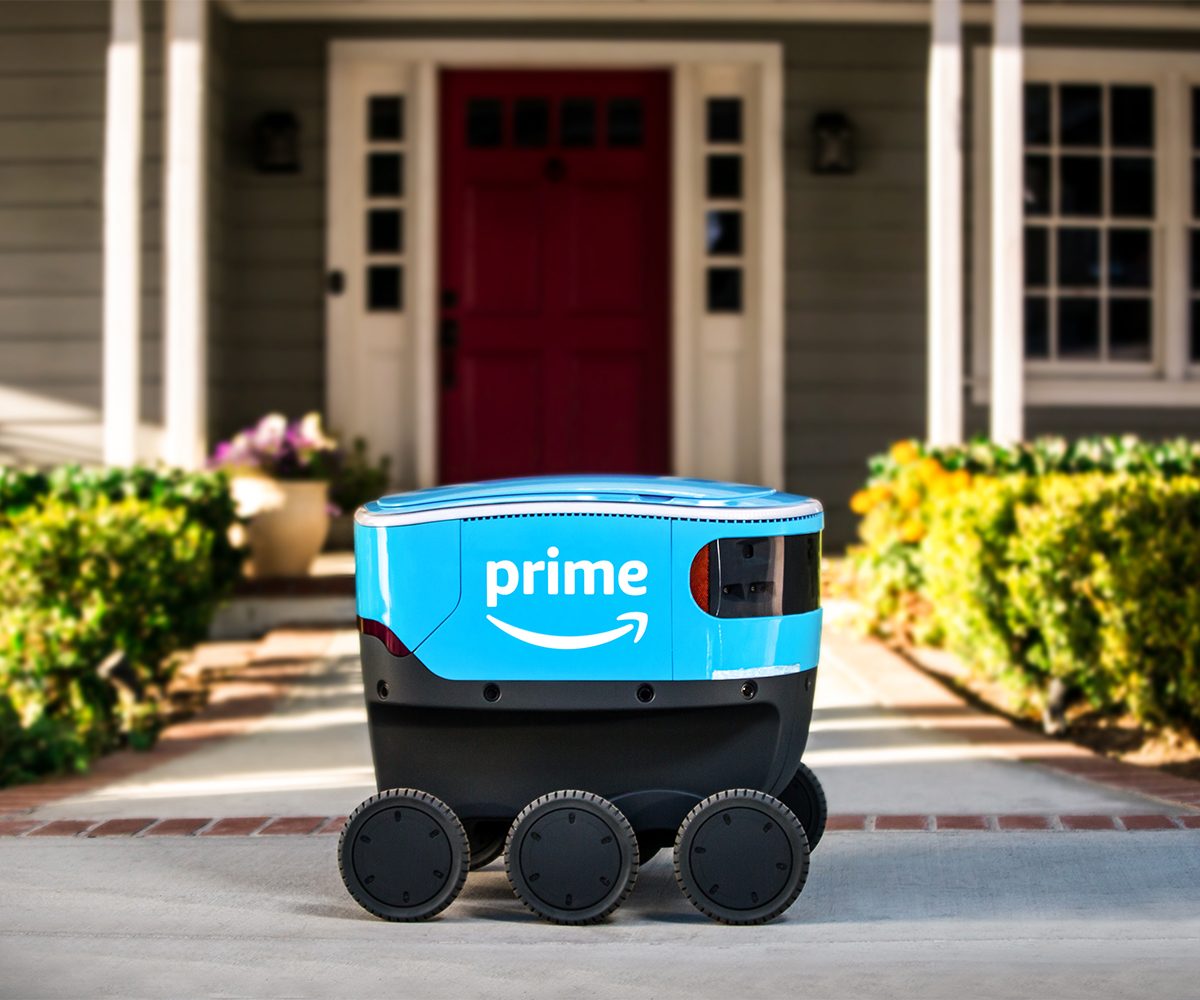
Image used with permission by copyright holder

Amazon is not the only company that’s busy exploring the possibility of delivery robots. Other initiatives around the world have used similar robots to deliver everything from mail to snacks. The leading company in this field is Starship Technologies, which has hoovered up venture funding to make its robot delivery dream a reality. Starship’s latest announcement involves a deal to deploy a fleet of 25 delivery robots to deliver takeout at George Mason University in Virginia. Students, faculty, and other staff can place orders by app and then have food delivered anywhere on campus in an average of 15 minutes.

How quickly Amazon rolls out its fleet of Amazon Scouts remains to be seen. Judging by the speed at which the retail giant has introduced robots into its warehouses, however, it shouldn’t be too long before fleets of Scouts are trundling down many streets in the country.

Luke Dormehl
I'm a UK-based tech writer covering Cool Tech at Digital Trends. I've also written for Fast Company, Wired, the Guardian…
Online payments are dimming the charm of one of America’s top tourist attractions
One of America's last analog tourist traditions just joined the cashless economy.
Photography, Binoculars, Camera

We all know those heavy, coin-operated binoculars perched on every scenic overlook in America, the ones you’ll find everywhere from the Empire State Building to the Grand Canyon. Turns out, they’ll soon start accepting tap-to-pay payments. 

This is great news, as you’ll no longer need to carry a quarter anymore, and making payments with your smartphone is much more convenient. However, I’d argue that the quarter was kind of the whole point.

Read more
The FBI secretly built an entire fake town just to practice cyberattacks
Hidden inside a warehouse in Alabama, the Kinetic Cyber Range recreates real-world digital attacks from start to finish.
FBI Kinetic Cyber Range Featured

While Hollywood has fake cities for filming movies, the FBI apparently has one for getting hacked. The agency has pulled back the curtain on its Kinetic Cyber Range, a 22,000-square-foot replica small town hidden inside its Huntsville, Alabama campus. But instead of training officers for shootouts or hostage rescues, the facility is designed to simulate realistic cyberattacks on homes, businesses, and critical infrastructure so investigators can practice responding to them in a controlled environment.

The FBI built an entire town just to simulate cybercrime

Read more
Brazil’s secret World Cup weapon taught the team when to ignore it
The data said he wasn't running enough. The footage said he was always in the “perfect tactical position.”
Soccer ball in net

Brazil has more World Cup titles than anyone, five of them to be precise, but after going through five straight tournaments without adding to that count, the team is leaning hard on data this time. 

Every player wears a sensor-packed "smart vest" tracking field position (via GPS), heart rate, and a stat called "player load," the same kind of numbers that your Whoop band or Apple Watch brags about, but tuned specifically for the sport.

Read more