According to a study published in the aptly titled journal Science Advances, scientists at Japan’s RIKEN Center for Developmental Biology successfully created a batch of lab-grown skin capable of not only growing hair but also sweating. Furthermore, the grown tissue, which the researchers implanted onto living mice, displayed the uncanny ability to facilitate bonds within the test animals’ muscle fibers and nerves. RIKEN hopes that these positive results can assist researchers with the creation and development of future skin transplants for burn victims or those afflicted with skin diseases.
Though the development of lab-grown skin isn’t at this point altogether revolutionary, the functionality of RIKEN’s sample blows previous studies out of the water. In the past, basic skin tissue grown in labs has been used in human patients; however, none featured more than two layers of actual tissue — nor the capacity to tout hair follicles or sweat glands. RIKEN’s manufactured skin substitute also features the typical three layers of tissue which are regularly found in human skin.
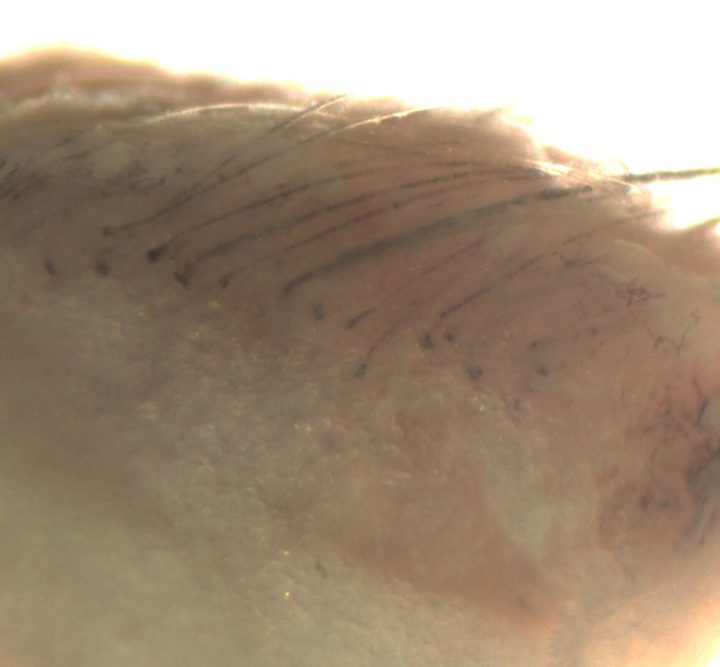
To create the sweat-producing, hair-growing skin samples, the research team started by extracting a batch of cells from the gums of mice. After using a mixture of chemicals to turn the derived gum cells into something similar to stem cells, they then developed a fully functioning, three-layer skin sample in a collection of lab dishes. Once created, the skin was implanted onto the mice where the researchers reported the normal connection of nerves and muscle tissues. These healthy connections allowed the implanted tissue to naturally function inside the mice without any sign of rejections. Additionally, hair began growing from the implants roughly two weeks after insertion.
“Our present outcomes indicate a proof of concept of regenerative therapy of a fully functional and integrated skin organ system that will have a potential for the application of future clinical treatment,” says RIKEN team leader Takashi Tsuji to Live Science.
Despite the success, there does remain a critical caveat regarding the use of such a breakthrough in humans; creation of human tissue would require the use of human cells along with the need to decipher how exactly one might grow skin tissue from those same cells. In the meantime, Tsuji acknowledged that RIKEN’s new lab-grown skin could serve as a test surface for cosmetics, helping alleviate the amount of testing currently performed on animals. The scientist also said his lab plans on working toward producing other lab-grown organs such as teeth or salivary glands.