
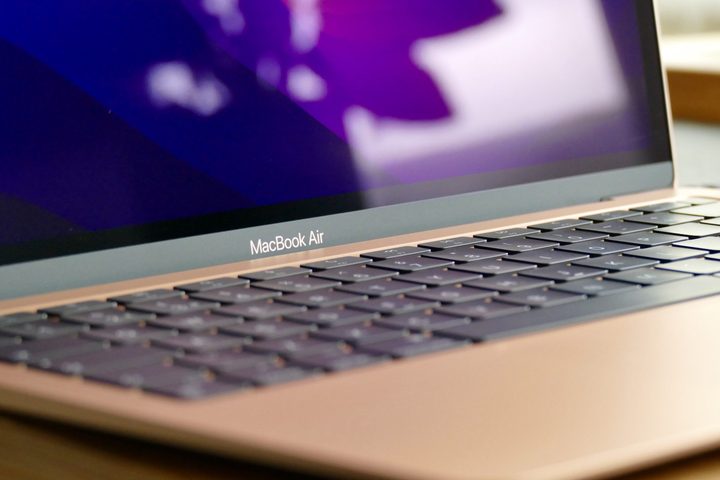

Apple finally stopped selling the M1 MacBook Air earlier this year. With a price cut to the M2 MacBook Air and the introduction of the M3, I was finally ready to stop recommending it as well.
But fast forward to this week’s WWDC announcements, and suddenly the M1 MacBook Air just got a whole lot more attractive. That’s thanks to the new Apple Intelligence features rolling out back multiple generations, all the way to the M1 Macs.
M1 MacBook comes back to life
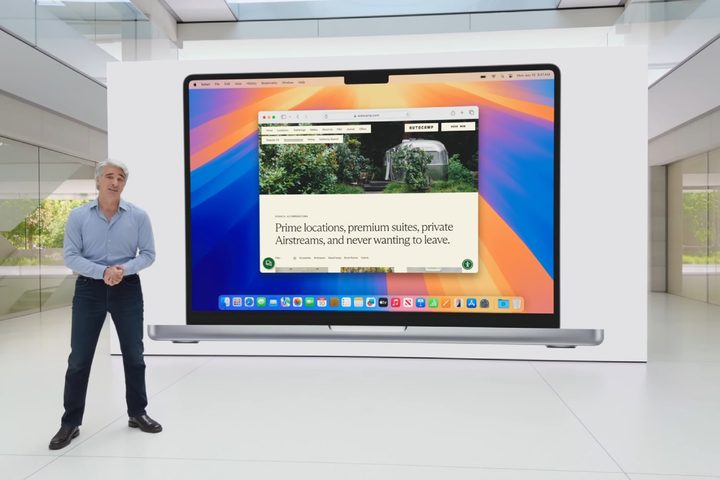
Like every year, the introduction of a new version of macOS means an adjustment to what older Macs are compatible with the new version. But with latest version, macOS Sequoia, Apple’s made a more aggressive jump. MacOS Sonoma was compatible with Macs going back to 2018, while Sequoia moves that to 2020. But that change is for a very good reason. The M1 chips were the first Macs to get the neural engine, the on-device AI accelerator responsible for powering much of the new Apple Intelligence features.
So, while there may be some disappointed that macOS Sequoia doesn’t go back as far, the fact that Apple has been able to enable AI features on four-year-old laptops is pretty impressive. It’s especially noteworthy when comparing to Microsoft’s Copilot+ launch, which reserved on-device AI features only for new laptops.
Of course, the AI features don’t suddenly make the M1 MacBook Air as fast as the M3 model — especially on the graphics front. Nor does it make the device as thin and modern as the newer MacBook Air models. But considering how fast and long-lasting the M1 MacBook Air already was, these new AI features go a long way toward keeping these old laptops feeling fresh. The difference in CPU performance between the M2 and M1 isn’t even large enough to be noticed in most tasks the MacBook Air is designed for anyways.
There is still a larger question, of course, about how the performance of these AI features will compare on an M1 MacBook Air versus an M3 MacBook Air. According to Apple, the neural engine on the M3 is 60% faster than on the M1. Certainly, that has to account for some amount of difference in performance.
Even so, the price difference is going to make these M1 MacBook Airs particularly attractive again. You can buy Buy at Amazon for under $500 right now. Knowing that you can get the latest AI features in a MacBook that cheap is mind-blowing.
But why?
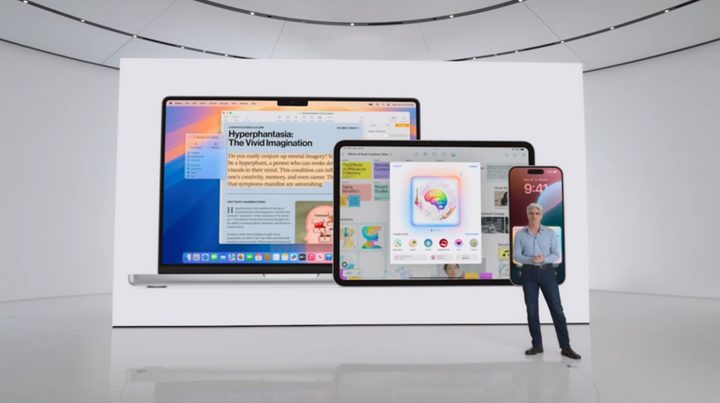
You might wonder why Apple would even enable these features to begin with. After all, it’d be an easy way to sell some new devices.
One of the problems is that Apple doesn’t actually have any new MacBooks to sell. The M4 has come to the iPad Pro, but it likely won’t be until 2025 that we get an M4 MacBook Air. Apple could have restricted the features just to the M3 MacBooks, but we all know the real jump in AI performance comes with the M4, not the M3.
There’s a bigger reason for Apple’s more generous approach though. In the end, Apple doesn’t appear to be introducing AI to sell laptops this quarter like Microsoft is. It’s investing in the long-term future of the Mac and proving that it hasn’t fallen behind.
So far, the result of Apple’s announcements has been a resounding success. After Apple’s announcements, its stock has already risen above Microsoft, allowing it to regain the title as the world’s most valuable company. All the while, Microsoft is facing some blowback with its own new AI features, including being forced to make changes to Recall, its most ambitious new feature.
In the end, converting the M1 MacBook Air into a proper AI PC was only possible because Apple has actually been ahead in AI — not behind. Despite the marketing hype, Apple has been investing more in AI acceleration than Microsoft or any of its partners for years already. That long-term investment is what allows it go back in time and give new capabilities to these old devices in a way Windows machines just can’t. That’s not to say Windows devices won’t have AI features, but they will lack the new Copilot+ features and will mostly be powered by the cloud rather than on-device.
I’m not saying everyone should go and buy an M1 MacBook Air necessarily. There are reasons to opt for one of Apple’s newer MacBooks, or even one of the new Windows Copilot+ devices. But for now, it feels like the M1 MacBook Air just regained a lot of value, which is an increasingly rare thing in tech.


